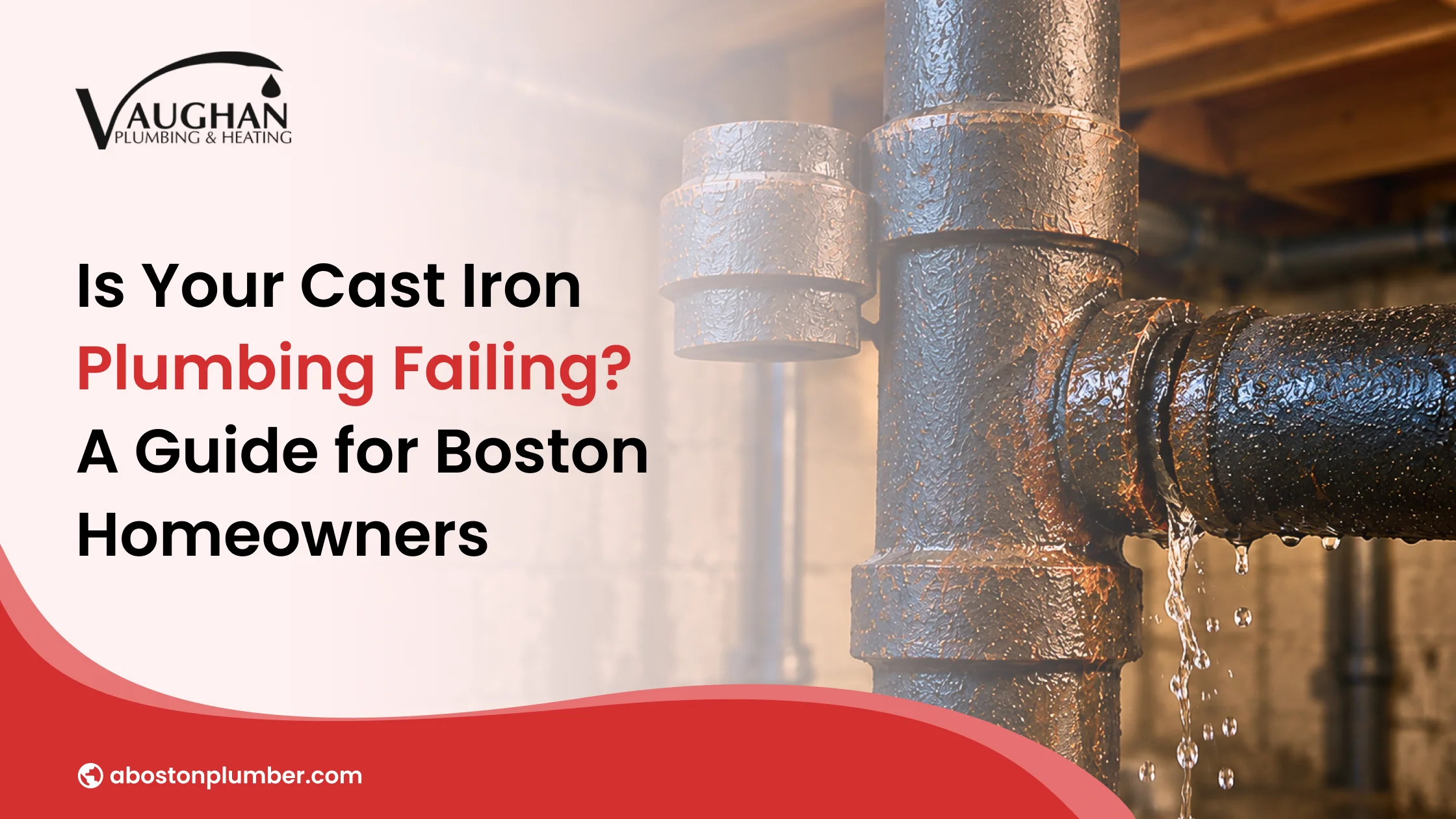

It starts with something small. You turn on the kitchen faucet in your Dorchester triple-decker, and the water trickles out with a brownish tint. A few days later, you spot a leak under the bathroom sink. Then another appears in the basement. Suddenly, plumbing problems that once seemed unrelated start to feel like a pattern.
For many Boston homeowners, this is how concerns about whole house repiping begin. Older homes may still have pipes in place for decades, and years of corrosion, mineral buildup, and past repairs can eventually take their toll.
The question is whether another repair will solve the problem or whether it’s time to look at the plumbing system as a whole.
In this blog, we’ll explore why older Boston homes may need repiping, six warning signs to watch for, what replacement can cost, how PEX compares with copper, and what to expect from the process
| When Should You Consider Whole House Repiping?
Consider it when your home has old galvanized or lead pipes, leaks in several places, low water pressure throughout the house, or rusty water, especially if repairs keep coming back. Once several of these problems show up together, replacing all the pipes often makes more sense than fixing them one at a time. |
Why Do Older Boston Homes Need Repiping?
Many Boston brownstones, triple-deckers, and pre-war homes still have some of their original water pipes. Over time, these pipes can corrode, restrict water flow, or develop leaks. Here are three common reasons older homes may need repiping.
- Pipes that rust from the inside: Many older homes used galvanized steel pipes coated with zinc to prevent rust. As the coating wears away, galvanized pipe corrosion and mineral buildup can narrow the pipes, reduce water pressure, and cause brown or discolored water.
- Lead pipes from the street: Some older homes may still have a lead service line that carries water from the street to the property. The Boston Water and Sewer Commission’s information on lead and your water explains how homeowners can find out what their service line is made of.
- A mix of old and new pipes: Decades of repairs and renovations can leave a home with different pipe materials connected throughout the system. These connections may need closer inspection, especially when leaks keep appearing in different areas.
For many homeowners, Boston plumbing replacement starts with one leak and leads to a bigger question: Is it time to replace the whole system?
6 Signs You Need Whole House Repiping

Common old house repiping signs include the six below. One sign alone may just need a repair. Two or more together, especially in an older home, usually mean the pipes themselves are wearing out.
1. Low Water Pressure Throughout the House
If only one faucet is weak, the cause is often a clogged faucet screen or a fixture problem. If every faucet and shower is weak, especially when two are running at once, the pipes may be narrowing from the inside. In older steel pipes, rust slowly builds up on the inner walls over the years and chokes the flow of water.
2. Brown or Rusty Water
Brownish water when you first turn on the tap, especially after a weekend away, often signals rusting pipes. It often clears within a few seconds, which makes it easy to ignore. If it happens regularly, tell a plumber. If it only happens on the hot-water side, the water heater may be the cause.
3. Frequent Leaks in Different Places
One leak can be bad luck. Leaks in several rooms usually mean the whole system is wearing out, since rust thins pipe walls and often breaks through first at the joints. Small leaks also add up: the EPA estimates that the average household loses more than 9,300 gallons of water a year to leaks. Leak detection can find the leaks hidden behind walls and under floors.
4. Metallic Taste or Smell
Water that tastes like metal can come from corroding pipes. Keep in mind that lead, the most serious concern in older homes, has no taste or smell. The only way to know whether you have lead is to test your water or find out what your pipes are made of.
5. Visible Rust or Corrosion on Exposed Pipes
Check the pipes in your basement. Rust, flaking, green or white crust around joints, or small drips at fittings all signal corrosion. Visible damage on the outside often means worse damage on the inside.
6. Older Home With Original Pipes
A home’s age is one of the strongest signs on this list. In Suffolk County, the median home was built in 1948, and more than half of all homes were built before 1950, according to U.S. Census data. Galvanized steel pipes were common in homes until about the 1950s and typically last 40 to 60 years. That means many Boston homes with original pipes are already past their expected lifespan.
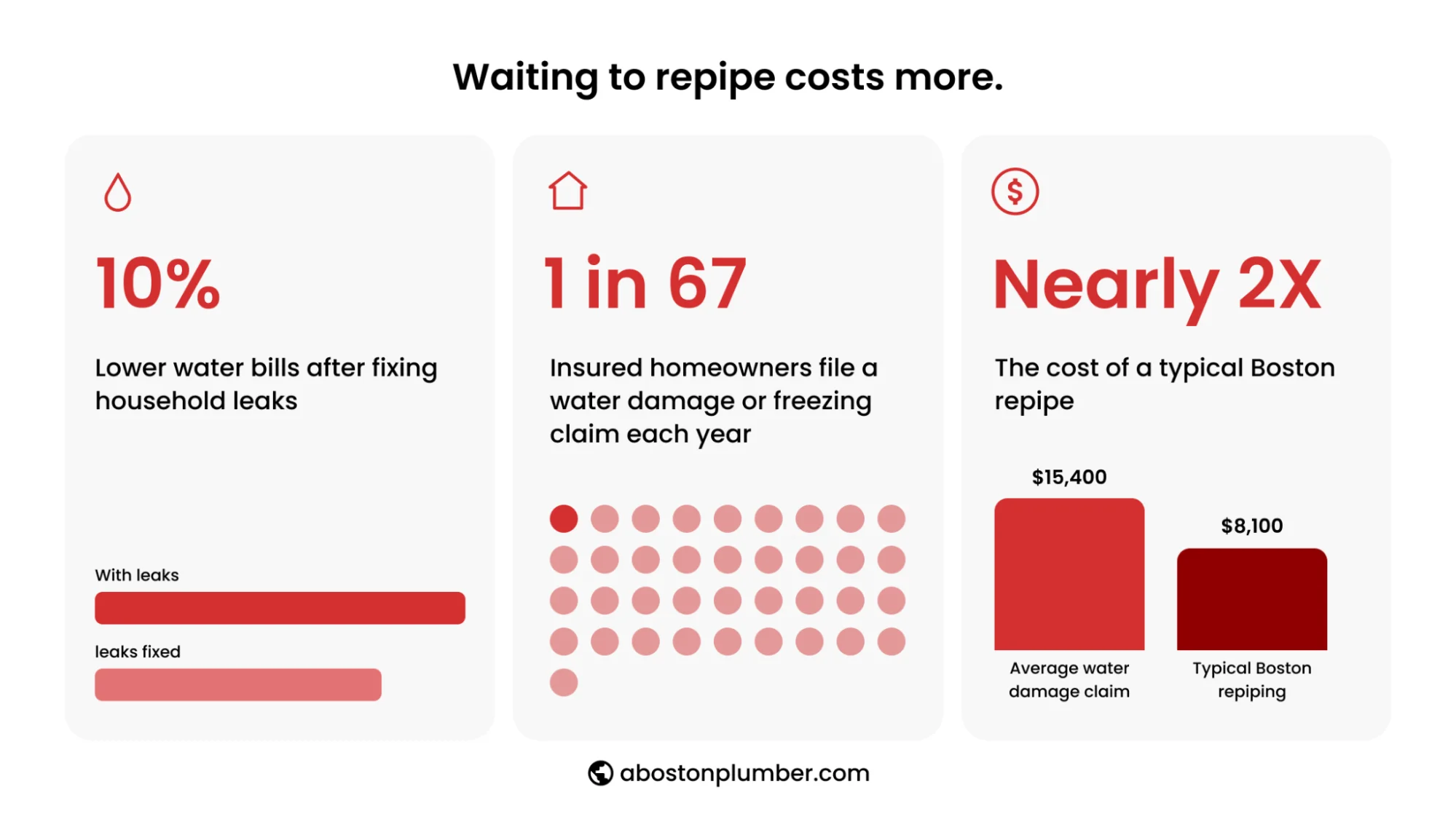
Are You Putting Off Your Repiping? Waiting Can Cost You More.
If you notice any of these signs, Vaughan Plumbing & Heating can inspect your pipes and tell you whether a repair or full repipe makes more sense before a small leak becomes a costly claim. |
Do You Need a Repair or a Full Repipe?
It depends on whether the problem is isolated or part of a pattern. A single damaged pipe may only need repair. Problems throughout the house usually mean the system is wearing out.
- One leak in one spot: If the surrounding pipes are in good shape, replacing that section may be enough.
- A slow drain or one weak faucet: Often a clog, a blocked faucet screen, or a faulty fixture, not a sign you need the whole house repiping.
- Leaks in several places: When different pipes start leaking within a short time, the whole system may be corroding.
- Rusty water and low pressure throughout the house: Common signs of buildup inside older galvanized pipes. If several sections are affected, replacing them is often more practical than fixing them one at a time.
If you’ve needed several pipe repairs in the past year or two, ask a plumber to assess the whole system. Comparing the cost of ongoing repairs with a full repipe makes the decision clearer.
How Much Does Whole House Repiping Cost in Boston?
Most whole house repiping projects in the Boston area cost between $7,800 and $26,245, depending on the size of the home and how much work it needs. Your actual cost depends on your home’s layout, the pipe material, and how easy the existing pipes are to reach.
- House size & layout: Larger homes and multi-floor properties need more pipe and labor.
- Bathrooms & kitchens: Each one adds more pipe and connections.
- Pipe material: PEX usually costs less to install than copper.
- Pipe access: Plaster walls, finished ceilings, and tight spaces add time, which is common in older Boston homes.
- Permits & wall repairs: Most projects need permits, and some patching is needed once the work is done.
Before you commit, ask for a written estimate that lists the scope, pipe material, labor, permits, and wall repairs. It makes quotes easier to compare.
If you’re already dealing with leaky pipes, home renovation plans can be the right time to repipe.
| Pro Tip: If you are planning a major kitchen or bathroom renovation in an older home, coordinate your whole house repiping at the same time. Opening walls for remodeling gives you the ideal window to replace aging lines without duplicating drywall repair costs later. |
PEX vs Copper Repipe: Which Material Is Better for a Repipe?
Most homes today are repiped with PEX or copper. Both are reliable, but they differ in cost, lifespan, and how they handle an older home. Here’s how a PEX vs. copper repipe compares:
| Factors | PEX | Copper |
| Material Cost in Boston | About $1 to $3 per foot | About $3 to $9 per foot |
| Expected Lifespan | About 40 years | About 70 years |
| Installation | Flexible, so it bends around corners with fewer wall openings | Rigid, so it needs more fittings and more access |
| In Cold Weather | Can stretch slightly as water freezes | Rigid, so it can’t flex when water freezes |
| Best For | Older homes where you want to limit wall damage | Homeowners who want a proven metal pipe with a long track record |
Why Is PEX Popular in Older Boston Homes?
PEX bends around corners and through tight spaces, potentially reducing the need for wall openings and disruption in homes with original plaster. It also conducts heat less readily than copper and can expand as water freezes, helping resist freeze-related damage.
Why Do Some Homeowners Still Choose Copper?
Copper has a long history in residential plumbing and can last for decades when properly installed and maintained. It’s also unaffected by light exposure, making it suitable for some exposed installations, though it typically costs more and can be harder to route through finished walls.
The right choice depends on your home. Its age, layout, wall type, and your budget all play a part, and many repipes use both materials. This decision is best made with a licensed plumber who has seen your pipes in person. Vaughan Plumbing & Heating can help!
Upgrade Your Home’s Plumbing with Vaughan Plumbing & Heating

Since 2008, Vaughan Plumbing & Heating has helped Greater Boston homeowners address aging plumbing systems, recurring leaks, and pipe deterioration. Whether you’re dealing with corroded galvanized pipes, repeated repairs, or plumbing concerns in an older Boston home, our licensed plumbers can assess your system and help you understand whether targeted repairs or whole-house repiping makes the most sense.
Ready to understand your pipes’ condition? Contact Vaughan Plumbing & Heating to schedule a whole-house repiping assessment and discuss the right solution for your home.
FAQs
- How long does whole house repiping take?
Many homes take a few days to about a week. Larger homes and multi-family buildings can take longer.
- Do walls have to be opened to repipe a house?
Some openings are usually needed, but they’re often small. Plumbers work from basements, closets, and cabinets where they can, then patch the openings afterward.
- Is the whole house repiping worth it?
If your home has old galvanized pipes or keeps needing repairs, it often is. New pipes improve water pressure and reduce the risk of leaks and water damage.
- Can I stay in my home during repiping?
In many cases, yes. The water may be off for part of the day while plumbers work, so ask your plumber about the schedule before work starts.
- Should I check the pipes before buying an older Boston home?
Yes. Ask the seller what the pipes are made of and when they were last replaced. A plumbing inspection before closing can show whether repiping may be needed soon.