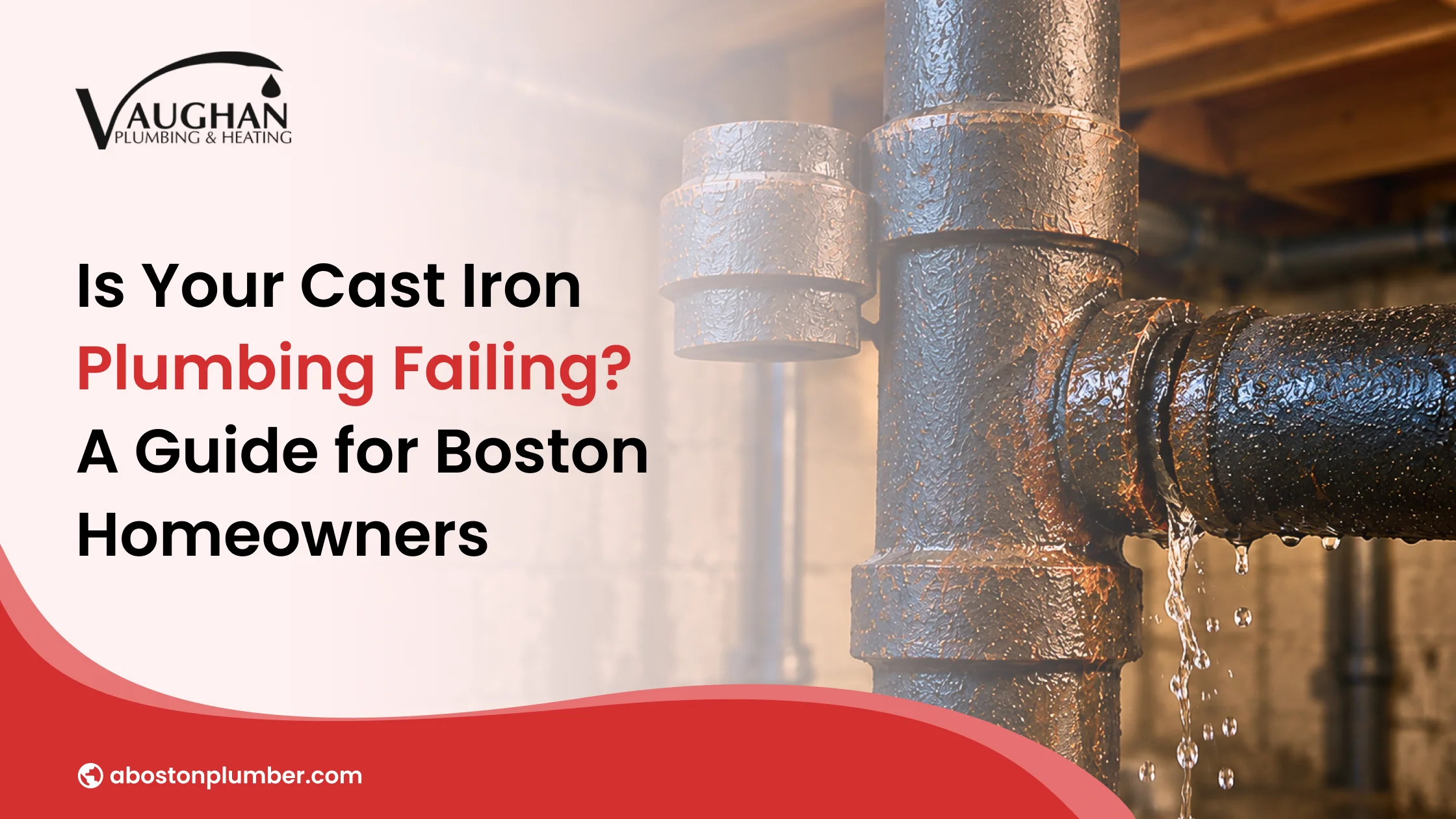
Walk down almost any street in Dorchester, the South End, or Jamaica Plain, and you’ll see homes with drain pipes older than anyone living inside them. Many of those homes still rely on cast iron plumbing, the heavy iron pipe that carried wastewater out of American homes for most of the 20th century.
Cast iron plumbing was built to last, and much of it has. But after 60 years or more, many of those pipes are wearing out from the inside, where you can’t see the damage until something goes wrong.
In this blog, we’ll cover how long cast iron pipes last, how to determine if your home has them, the warning signs of failure, your repair and replacement options, and when to call a professional like Vaughan Plumbing & Heating.
How Do You Know If Cast Iron Plumbing Is Failing?Common signs include recurring clogs, slow drains in several fixtures, sewer smells in the basement, and rust, cracks, or damp spots on or near drain pipes. If you notice more than one, a camera inspection can show the pipe’s condition from the inside. |
How Long Does Cast Iron Plumbing Last?
Cast iron plumbing can last many decades, but not forever. InterNACHI’s life expectancy chart, a standard reference for home inspectors, estimates about 60 years for cast iron waste pipes above ground and 50 to 60 years for pipes underground.
Well-maintained pipes can last longer, while wet soil, harsh cleaners, and heavy use can shorten that range. Those numbers matter in Boston. Plastic drain pipe didn’t become common in homes until around the 1970s, so most houses built before then used cast iron.
When it comes to historic home plumbing, Boston is a classic example: most older homes here still have at least some original cast iron, and much of it is near or past its expected lifespan.
How Can You Tell If Your Home Has Cast Iron Pipes?

Start in the basement. Look for the large vertical drain pipe (the main stack) and the pipes connected to it. Cast iron usually has these features:
- Color & Weight: Dark gray or black, and noticeably thick and heavy
- Joints: Wide, bell-shaped “hubs” where one pipe section fits into the next
- Sound: A dull, solid thud when you tap it, not the hollow sound of plastic
- Magnet Test: A magnet will stick to cast iron (and to galvanized steel), but not to PVC or copper
Many older homes have a mix, with newer plastic sections tied into original cast iron.
5 Signs Your Cast Iron Plumbing May Be Failing

Some of these look like everyday plumbing problems. When they keep coming back, the pipe itself may be the cause.
- Clogs That Keep Coming Back
An occasional clog doesn’t mean your pipes are failing. But if the same drains clog again and again, even after cleaning, the problem is likely deeper in the line. Buildup inside the pipe narrows the space for water to flow.
- Slow Drains Throughout the Home
One slow sink usually has a local clog. When several tubs, sinks, and floor drains slow down at the same time, the problem is often in the main drain line.
- Water Stains, Damp Spots, or Bubbling Paint
Slow leaks from a cracked drain pipe often show up as damp patches on basement walls, bubbling paint, or stains on ceilings below bathrooms.
- Visible Rust, Flaking, or Cracks
Corrosion weakens cast iron pipe over time. If you see heavy rust, flaking, or cracks on exposed pipes or around joints, have a plumber check whether it’s one weak spot or a sign of wider wear.
- Sewer Smells, Gurgling, or Backups
Sewer odors in the basement, gurgling drains, or wastewater coming up through a floor drain can all point to a cracked pipe or failing sewer line. Take these seriously in older Boston homes, because the damaged section is often hidden under floors, inside walls, or underground.
Why Do Cast Iron Pipes Fail?Most cast iron pipes fail slowly, from the inside out, for three main reasons.
|
What Are the Advantages & Disadvantages of Cast Iron Plumbing?
Cast iron plumbing has real strengths, which is why it was the standard for so long. Most of its weaknesses show up with age.
|
Advantages |
Disadvantages |
| Very strong and long-lasting when well maintained | Rusts and corrodes from the inside over time |
| Much quieter than plastic pipe | Builds up scale that leads to recurring clogs |
| Doesn’t burn, a real plus in multi-family buildings | Heavy and harder to repair or replace |
| Thick walls hold up well to everyday wear | Older joints can loosen and let in tree roots |
Cast iron that’s still in good condition is often worth keeping. It’s usually the age of the pipe, not the material itself, that causes problems.
Cast Iron vs PVC Plumbing: Which Should You Choose?
If part of your cast iron plumbing needs replacing, PVC is the most common choice in homes today. It’s lighter, cheaper, and doesn’t rust or build up scale inside, while cast iron still has the edge in noise and fire resistance.
| For many older Boston homes, the practical answer is both. In many cases, contractors replace damaged sections with PVC and connect them to cast iron that’s still in good shape. |
When Should You Call a Plumber?
It’s worth having your home’s plumbing/ pipes checked if:
- You’ve had more than one main-line backup in a year
- You notice two or more of the warning signs above
- You’re buying, selling, or renovating an older home
- You own a multi-family property and aren’t sure what condition the drain lines are in
Vaughan Plumbing & Heating inspects, cleans, and repairs cast iron plumbing in homes across Greater Boston. We also offer a free camera inspection with main sewer pipe cleaning, so you can see the inside of your line before deciding on any repairs.
Get Your Cast Iron Pipes Checked with Vaughan Plumbing & Heating

Since 2008, Vaughan Plumbing & Heating has helped Greater Boston homeowners keep older plumbing working, with licensed plumbers, flat-rate pricing, and a two-hour arrival window.
Concerned about your older pipes? Contact Vaughan Plumbing & Heating to schedule a camera inspection of your cast iron plumbing.
FAQs
- Is cast iron still used for plumbing?
Yes. Cast iron is still installed today, mainly in commercial, high-rise, and multi-family buildings, where its fire resistance and quiet drainage matter most. In most single-family homes, PVC has largely replaced it.
- Can new PVC pipe be connected to old cast iron?
Yes, when it’s done correctly. Plumbers use couplings designed to join the two materials. The existing cast iron should be checked first, though, so the new section isn’t tied into pipe that’s close to failing.
- Should I replace cast iron pipes before selling my home?
Not always. A camera inspection before listing can show whether the pipes are in good shape or need repairs, which helps you avoid surprises during the buyer’s inspection.
- Does homeowners insurance cover cast iron pipe failure?
It depends on your policy. Many policies cover sudden water damage but not the cost of replacing pipes that have worn out over time, so check with your insurance provider.
- Should I get a sewer line inspection before buying an older Boston home?
Yes, especially for homes built before the 1970s. A standard home inspection usually doesn’t include a camera inspection of the sewer line, so ask for one separately. It can reveal cracks, root intrusion, or heavy buildup before you commit to the purchase.