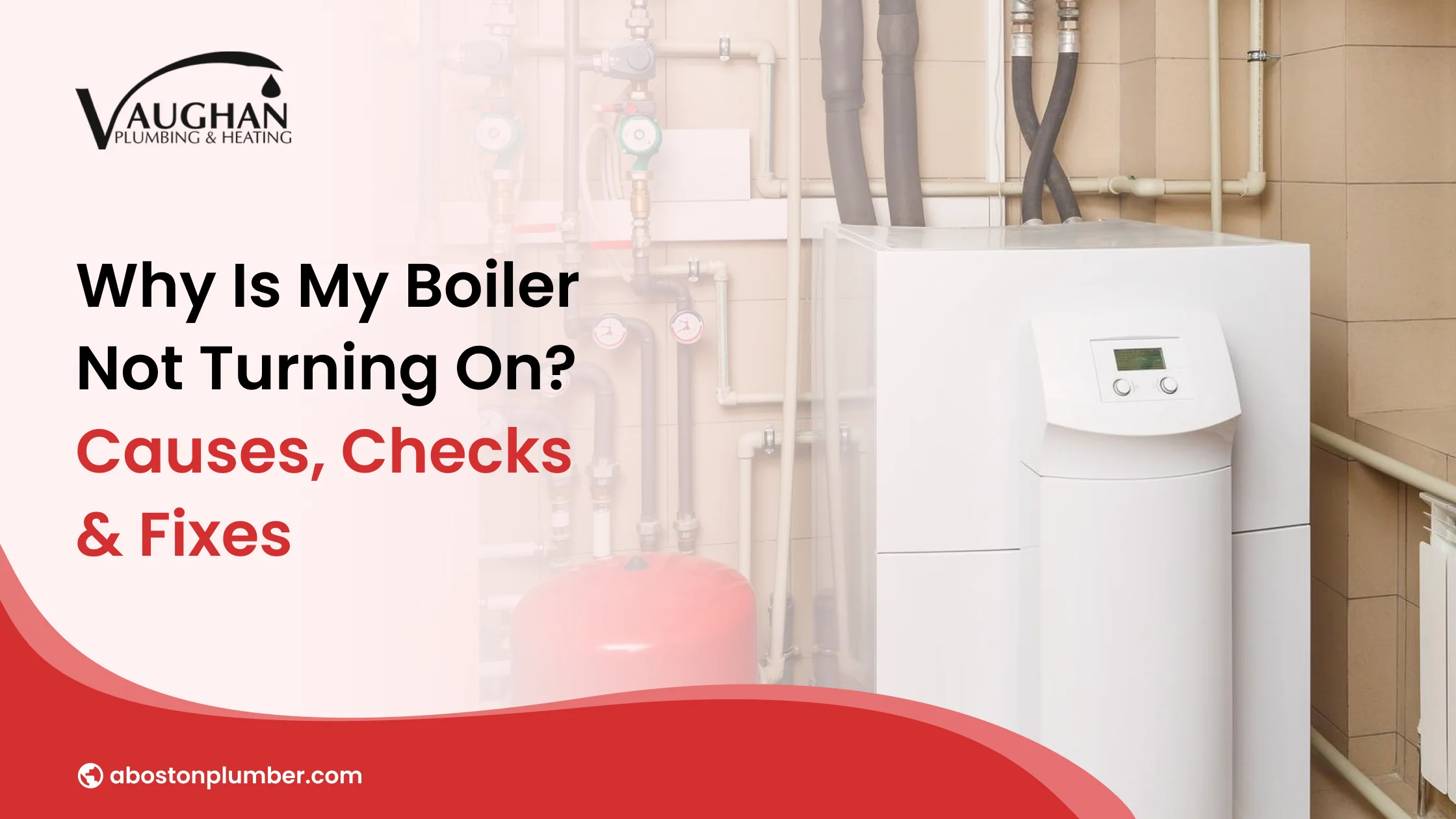
It’s the first cold morning of the season. You turn up the thermostat, waiting to hear the boiler’s familiar hum. Nothing. The radiators stay cold, the house gets colder, and a quick trip to the basement confirms it: the boiler is silent.
A boiler that won’t turn on is one of the most common heating problems Boston homeowners face as temperatures drop. Sometimes the cause is simple, like a thermostat setting or a tripped switch. Other times, a silent boiler can be the first sign of a larger heating system failure that needs a licensed professional’s attention.
So before the cold settles in, what should you check? And how do you know when it’s time to stop troubleshooting and call for help?
In this blog, we’ll walk through the common reasons a boiler won’t start, the quick checks you can safely make, the warning signs that shouldn’t be ignored, and how Vaughan Plumbing & Heating can help get your heat back on.
| Why Is My Boiler Not Turning On?
Common causes include a thermostat problem, a tripped breaker or emergency shutoff switch, low water pressure, a closed gas valve or empty oil tank, a pilot light or ignition problem, or a frozen condensate line on high-efficiency boilers. If the simple checks don’t restore heat, or you smell gas, call a licensed heating professional. |
When Is It Unsafe to Troubleshoot Your Boiler?
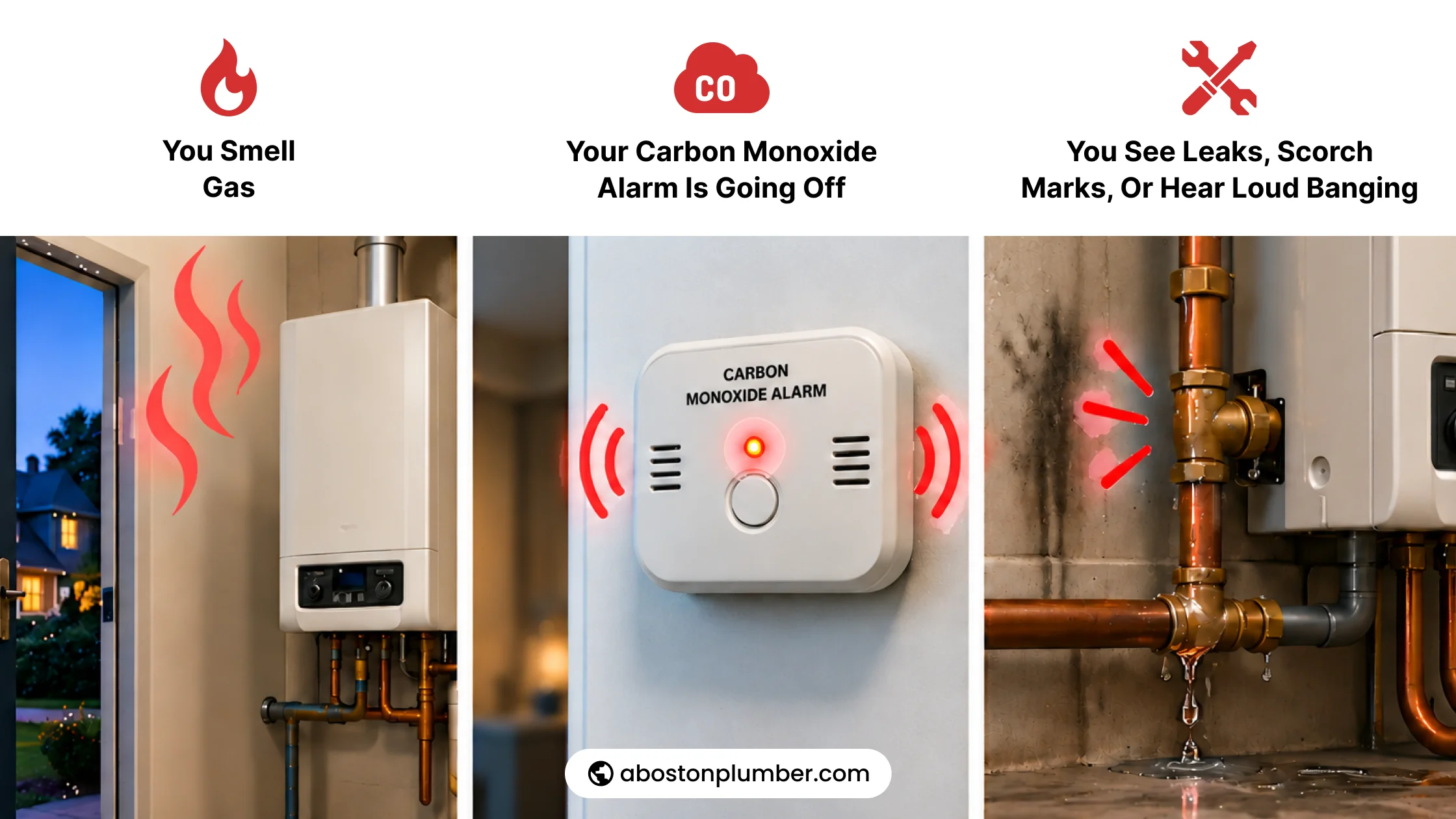
Before you check anything, rule out these situations. If any of them apply, don’t try to restart the boiler.
- You smell gas: Leave the house right away, don’t touch light switches or appliances, and call your gas utility or 911 from outside.
- Your carbon monoxide alarm is going off: Get everyone outside and call 911.
- You see leaks, scorch marks, or hear loud banging: Turn the boiler off at the emergency switch and call a licensed technician. These can point to a cracked part, overheating, or a pressure problem.
These situations need a professional, not troubleshooting.
What Can You Check Before Calling a Technician?
Many no-heat calls have a simple cause. Go through these before scheduling service.
Check the Thermostat
Make sure it’s set to “Heat,” and turn it a few degrees above the current room temperature. If it runs on batteries and the screen is blank, replace them. Homes with several heating zones have a thermostat for each one, so check whether only one area is cold.
Check the Power & Emergency Switch
Your boiler needs electricity even if it burns gas or oil. Check the boiler’s circuit breaker. Then find the emergency shutoff switch, which in many Boston homes is a red switch at the top of the basement stairs or near the boiler. It’s easy to flip off by accident, so make sure it’s on.
Look at the Pressure Gauge
Most residential boilers have a gauge on the front. When the boiler is cold, the pressure is typically around 12 to 15 psi, but check the label or manual for your model. If it reads near zero, the system may not have enough water to fire safely. Don’t try to refill it yourself unless you know the system. A plumber can find out why the pressure dropped.
Make Sure the Fuel Supply Is On
For a gas boiler, confirm the gas valve on the supply line is open (the handle runs in the same direction as the pipe). If your other gas appliances aren’t working either, call your gas utility. Many older Boston homes still heat with oil, so if yours does, check the tank gauge. An empty or nearly empty tank is a common cause of a boiler not turning on.
Look for an Error Code or Reset Button
Many newer boilers show an error code on a digital display. Write it down, since it helps a technician diagnose the problem faster. If your boiler has a reset button, press it once. If it shuts off again, don’t keep pressing it. Repeated resets can flood an oil burner with fuel or hide a more serious problem.
5 Common Causes for Why Your Boiler Isn’t Turning On
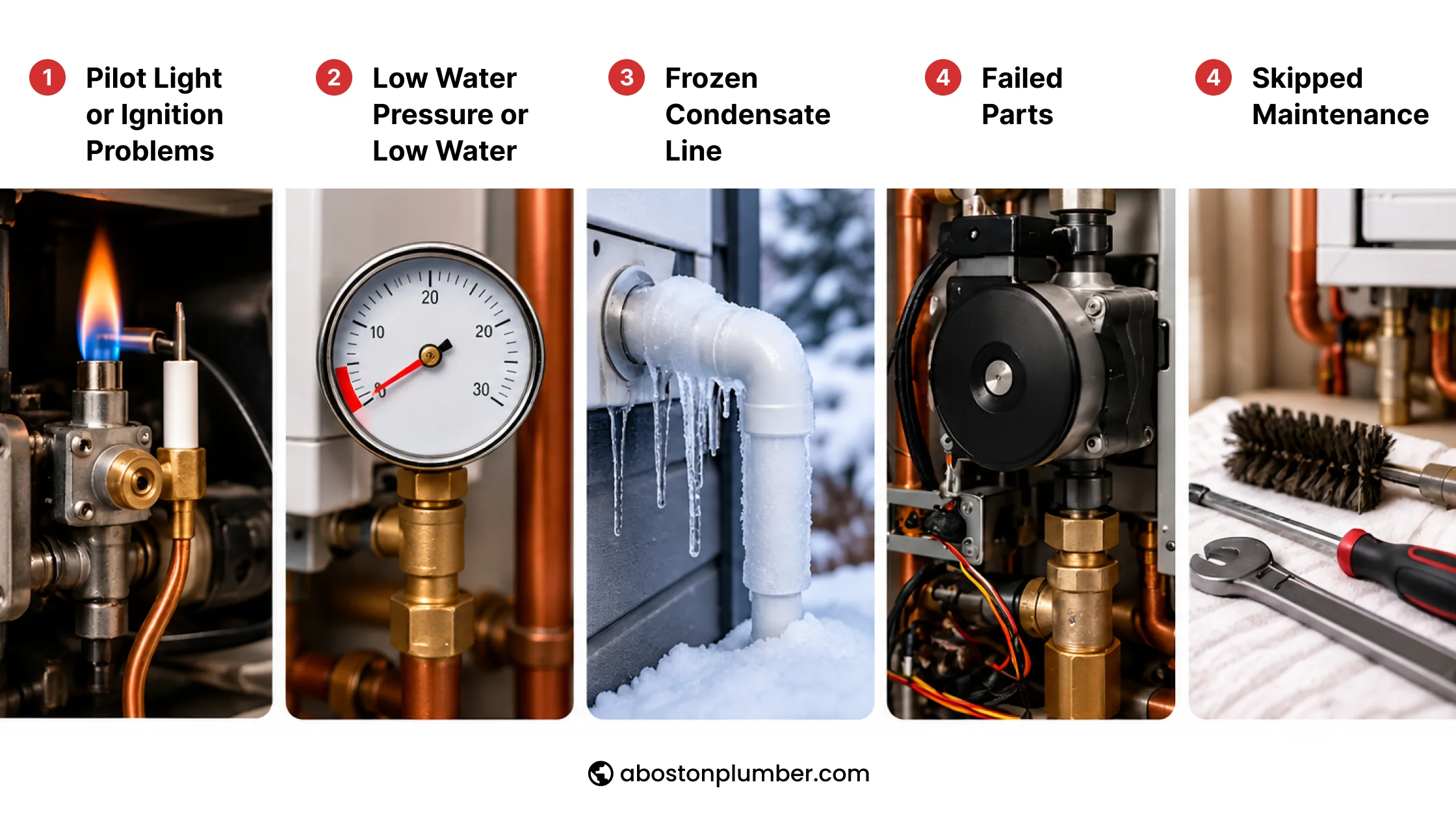
If the quick checks didn’t help, one of these is likely the cause.
- Pilot Light or Ignition Problems
Older gas boilers have a standing pilot light that can go out, while newer models use electronic ignition. If the pilot is out or the boiler won’t ignite, have a technician check the thermocouple, igniter, and gas control rather than relighting it yourself.
This kind of pilot light troubleshooting involves the gas system, so it’s safest to leave it to a licensed professional.
- Low Water Pressure or Low Water
Boilers have a safety control that stops them from firing if there isn’t enough water. Pressure can drop because of a leak, a faulty valve, or air in the system. If a boiler keeps losing pressure, a professional needs to find the cause.
- Frozen Condensate Line
High-efficiency condensing boilers drain water through a small plastic pipe, often running outside. During a hard Boston freeze, that pipe can ice over and shut the boiler down. This is especially common in the first deep cold snap of the winter.
- Failed Parts
Circulator pumps, zone valves, flame sensors, and control boards wear out over time. When one fails, your boiler may not turn on at all, or it may run without sending heat to the radiators.
- Skipped Maintenance
Many sudden breakdowns trace back to skipped annual service. Regular hydronic heating maintenance, such as cleaning the burner, checking safety controls, and bleeding air from radiators, catches small problems before they leave you without heat on a January night.
When Should You Call a Professional for Boiler Repair?
Call a licensed heating technician if:
- The boiler still won’t start after the quick checks
- It locks out again after one reset
- The pressure keeps dropping, or the gauge reads near zero
- The pilot won’t stay lit
- You hear banging, gurgling, or grinding
- You see leaks, rust, or soot around the boiler
- The boiler is more than 15 to 20 years old and breaking down more often
If your home is losing heat fast during a freeze, don’t wait. Cold radiators can quickly lead to frozen pipes.
Vaughan Plumbing & Heating provides Boston boiler repair for gas, oil, and high-efficiency systems, along with emergency plumbing when a breakdown can’t wait. Our licensed technicians diagnose the problem, explain the fix, and give you flat-rate pricing before any work begins. If you need an emergency plumber that Boston homeowners can count on, we offer a two-hour arrival window.
Restore Your Heat Fast with Vaughan Plumbing & Heating

Most boiler breakdowns happen when you need heat the most. The National Fire Protection Association notes that December, January, and February are the peak months for home heating fires, so have your heating equipment checked before the coldest weeks arrive.
Since 2008, Vaughan Plumbing & Heating has helped Greater Boston homeowners keep their boilers working, from routine tune-ups to emergency repairs.
Don’t shiver through a New England freeze. Contact Vaughan Plumbing & Heating for expert diagnostic troubleshooting, emergency boiler repair, and routine heating maintenance. Call +1 (781) 686-5049.
FAQs
- Why is my boiler not turning on but the thermostat is working?
The thermostat may be sending a signal the boiler can’t act on. Common causes include a tripped emergency switch, low water pressure, no fuel supply, or an ignition problem. If the quick checks above don’t help, call a technician.
- Can I reset my boiler myself?
Yes, you can press the reset button once. If the boiler shuts off again, stop and call a professional. Pressing it repeatedly can create a safety risk, especially with oil burners.
- Is a boiler not turning on an emergency?
It can be. If you smell gas or your carbon monoxide alarm sounds, leave the house and call for help immediately. If it’s freezing outside and your home is losing heat, treat it as urgent to avoid frozen pipes.
- Why does my boiler stop working when it gets very cold?
On high-efficiency boilers, the outdoor condensate drain line can freeze during a cold snap and shut the system down. Older boilers under heavy demand can also expose worn parts.
- How often should a boiler be serviced?
Once a year, ideally in the fall before heating season. Annual service helps prevent breakdowns, keeps the boiler running efficiently, and checks important safety controls.