
On February 4, 2023, temperatures at Logan Airport dropped to -10°F, making it the city’s coldest temperature since 1957. That is a full 42 degrees below the point where water freezes. While temperatures that extreme are unusual, stretches of single-digit weather are not uncommon during a Boston winter.
If you own a home here, that means frozen pipes are something you need to prepare for before the cold really sets in. Pipes in unheated basements, crawlspaces, garages, or exterior walls often freeze first, and one vulnerable section can cause a burst pipe and a very expensive cleanup.
The best protection is not waiting until a faucet suddenly stops running. It is having a seasonal routine in place before the coldest weather arrives.
In this blog, we cover what Boston homeowners should do before winter, how to protect pipes when temperatures drop, what to do during a severe cold spell, and when it makes sense to call a professional plumbing service like Vaughan Plumbing & Heating.
How Do You Prevent Frozen Water Pipes in Boston?
The best way to prevent frozen water pipes in Boston is to prepare before temperatures drop. Insulate exposed pipes, seal cold drafts, disconnect outdoor hoses, drain exterior faucets, keep the home heated during cold spells, and pay extra attention to plumbing in basements, crawlspaces, garages, and exterior walls.
When temperatures drop extremely low, opening sink cabinets and letting vulnerable faucets drip can also help reduce the risk of freezing.
Why Are Boston Homes More Vulnerable to Frozen Pipes?
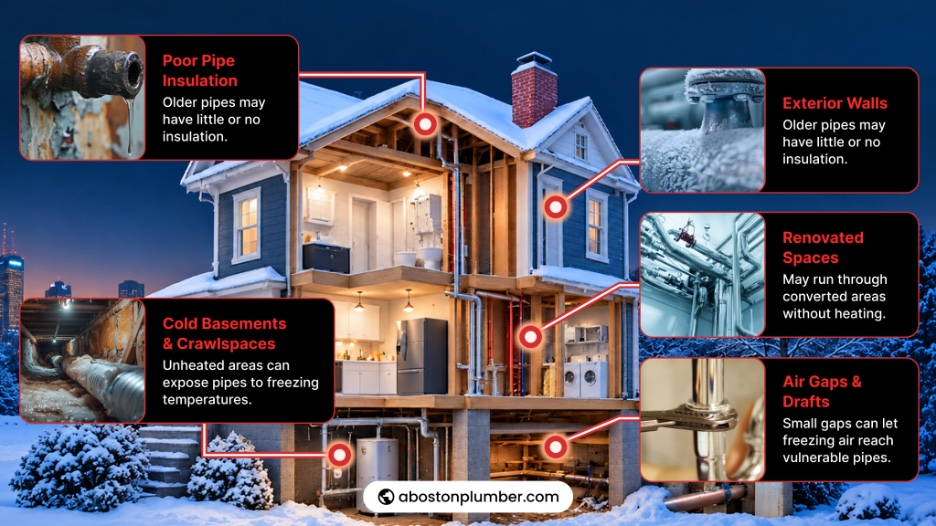
Greater Boston has some of New England’s oldest housing, from single-family homes to triple-deckers, Victorians, and pre-war properties that have been renovated or added onto over the years. Many were built long before modern insulation standards, and that often shows up in the plumbing.
In older Boston homes, you may find:
- Little or no insulation around older pipes
- Water lines running close to exterior walls
- Pipes passing through cold basements or crawlspaces
- Plumbing added during renovations in spaces that were never meant to be heated
- Small gaps that let very cold outside air reach the pipes
If any of these sound like your home, start there. Some vulnerable pipes are hidden inside walls, so a pipe can freeze even when the rest of the house feels warm.
How to Prevent Frozen Pipes During Boston, New England Winters
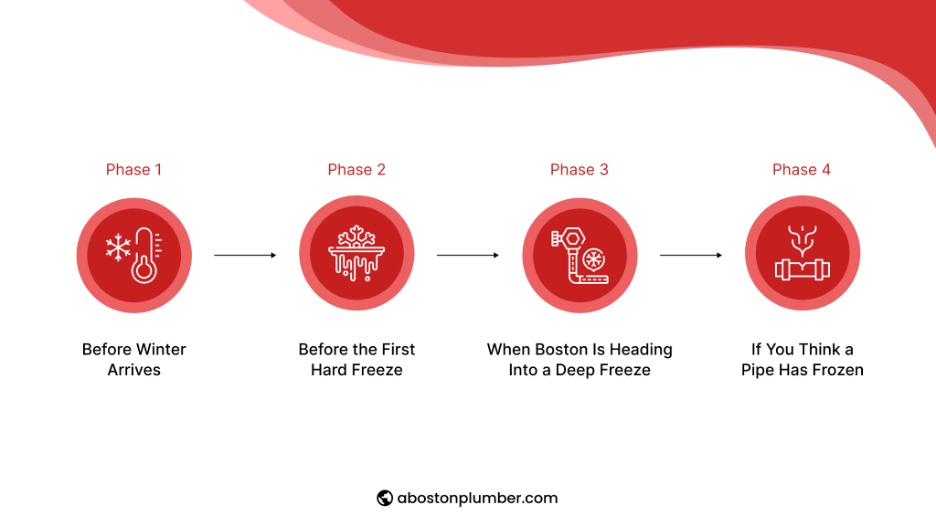
Preventing frozen pipes isn’t something you do once and forget about. What your plumbing needs in October differs from what it needs when Boston heads into a night of single-digit temperatures.
Breaking your winter plumbing preparation into stages makes it much easier to stay ahead of the problem:
Phase 1: Before Winter Arrives
Fall is the best time to prep your plumbing for winter. Boston homeowners tend to put it off until the first cold snap. A few hours now can save you from a January emergency.
Find the Pipes Most Likely to Freeze
Start with the coldest parts of your home:
- Unfinished basements
- Crawlspaces
- Garages
- Attics with plumbing
- Pipes close to exterior walls
- Areas near basement windows and exterior doors
A simple rule: if a pipe runs along a cold basement wall, or you can feel cold air around it, it needs attention before winter.
Insulate Exposed Pipes
Foam pipe sleeves are an inexpensive, easy way to protect exposed plumbing. They slip over the pipe and help hold in heat. Insulating water lines won’t guarantee a pipe never freezes, but it slows heat loss and makes a real difference for exposed pipes in the coldest parts of the house. Cover the full length of the pipe, including bends and valves, since an uncovered gap can still freeze.
Stop Cold Air From Reaching Your Plumbing
Check for drafts around:
- Basement windows
- Foundation openings and vents
- Exterior doors
- Spots where pipes pass through walls
- Any visible gaps near plumbing
Even a heated basement can have one very cold pocket if outside air blows directly onto a pipe. Closing basement windows and sealing small gaps with caulk or expanding foam can prevent that.
Locate Your Main Water Shutoff
Find your main water shutoff before you need it. In many Boston homes, it’s in the basement near where the water line enters the house, often close to the water meter. Every home is different, though, so take a few minutes to find yours and make sure it turns.
Pro Tip: Before winter arrives, locate your home’s main water shutoff valve and make sure you know how to operate it. Everyone in the household who may need to respond to an emergency should know where it is.
Phase 2: Before the First Hard Freeze
Outdoor faucets are usually the first fixtures to freeze, so take care of them before overnight temperatures drop below freezing.
Disconnect Garden Hoses
A hose left attached holds water inside the hose and faucet. When that water freezes, it expands and can crack the faucet or the pipe inside your wall. Disconnect every hose, drain it, and store it for the winter.
Drain Outdoor Faucets
Outdoor hose bib winterization is a simple job if your home has an indoor shutoff valve for each outdoor faucet. Close the indoor valve, then open the outdoor faucet to drain the remaining water. Leave the outdoor faucet open until spring.
Check Whether Your Outdoor Faucet Has a Shutoff
Some older Boston homes don’t have a separate, working shutoff valve for every outdoor faucet. Others have valves that leak or won’t close fully. If you can’t shut off or fully drain an outdoor line, have a plumber take a look before freezing weather arrives, since that faucet and the pipe behind it are at real risk.
Phase 3: When Boston Is Heading Into a Deep Freeze
The forecast says tonight will be bitterly cold. Here’s what to do:
Keep the Heat Consistent
Keep your heat running, including overnight. Don’t turn off your heat while you’re away. Keeping the home at around 55°F or above helps protect plumbing from freezing.
Open Cabinets Around Vulnerable Plumbing
If a kitchen or bathroom sink sits against an exterior wall, open the cabinet doors underneath. This lets warm room air reach pipes that would otherwise sit in a cold, closed space.
Use the Drip Method Only When Needed
During an extreme cold snap, letting a vulnerable faucet drip slightly keeps water moving through the line and helps relieve pressure if ice starts to form. You don’t need to do this every winter night. Save it for faucets on exterior walls or in cold areas when temperatures fall well below freezing.
If you find yourself dripping the same faucet every time the temperature drops, the pipe feeding it likely needs better protection.
What If You’re Traveling?
A cold house with no one home is one of the most common setups for a burst pipe. Before you leave:
- Keep the heat running
- Avoid setting the thermostat unusually low
- Have someone check the property during longer absences
- Consider professional winterization if the home will be empty for an extended period
Phase 4: If You Think a Pipe Has Frozen
Common signs of a frozen pipe include:
- https://abostonplumber.com/wp-admin/profile.php
- Little or no water from one faucet
- A sudden drop in water flow
- Frost on an exposed pipe
- A visible bulge or unusual section of pipe
What You Can Safely Do
If the frozen section is exposed and easy to reach:
- Keep the affected faucet open
- Apply gentle heat gradually, such as with a hair dryer
- Start closest to the faucet and work toward the frozen area
What You Should Never Do
Never use an open flame, torch, or other direct flame to thaw a frozen pipe. It can damage the pipe and create a serious fire risk inside your walls.
When to Stop & Call a Plumber
Call a professional if:
- The frozen section is inside a wall or ceiling
- You can’t find the frozen area
- The pipe is cracked, bulging, or leaking
- Water starts leaking as the pipe thaws
- The same pipe freezes repeatedly
- You can’t safely reach the affected plumbing
If a pipe bursts, shut off your main water valve right away. Vaughan Plumbing & Heating provides frozen pipe repair and emergency plumbing across Greater Boston, including checking for hidden damage that may not show up until days after a pipe thaws.
When Should You Call a Plumber Before Winter?
You can handle much of your winter prep yourself. Some problems, though, are hard to spot or fix without a plumber. It may be worth calling one before winter if:
- Your pipes have frozen in previous winters
- You have exposed plumbing in very cold parts of the house
- An outdoor faucet can’t be shut off or drained properly
- Your main water shutoff doesn’t turn smoothly
- Plumbing runs through walls or additions you can’t inspect
- You own an older or multi-family Boston property and aren’t sure which lines are vulnerable
- A particular faucet or pipe causes problems every time temperatures drop
Vaughan Plumbing & Heating can inspect vulnerable plumbing in basements, crawlspaces, garages, and exterior walls, test your main and outdoor shutoff valves, and look for leaks or aging pipes likely to fail in a freeze. If a pipe needs better insulation, rerouting, or an upgraded outdoor faucet, our team explains the fix and gives you flat-rate pricing before any work begins.
Prepare Your Home for Boston Winters with Vaughan Plumbing & Heating

Boston winters can be unpredictable, but your plumbing preparation doesn’t have to be. If you’re worried about exposed pipes, outdoor faucets, an older plumbing system, or a line that has frozen before, having it checked before temperatures plunge can save you from a much bigger problem later.
Since 2008, Vaughan Plumbing & Heating has helped Greater Boston homeowners prevent frozen water pipes before winter, and with frozen pipe repair and emergency plumbing when problems do happen.
Schedule a winter plumbing inspection or contact Vaughan Plumbing & Heating if you need help protecting vulnerable pipes before the next freeze.
Frequently Asked Questions
At what temperature do pipes freeze in Boston?
Water freezes at 32°F, but pipes don’t automatically freeze the moment it gets that cold outside. The risk rises when temperatures stay well below freezing for several hours, especially for exposed or poorly insulated pipes.
Which pipes are most likely to freeze?
Pipes in basements, crawlspaces, garages, attics, exterior walls, and other unheated or poorly insulated areas are at the greatest risk.
Should I let my faucets drip during a Boston freeze?
During severe cold, letting a vulnerable faucet drip slightly can keep water moving and reduce pressure inside the pipe. It’s most useful for pipes that run through cold or exterior areas of the home.
How do I know if a pipe is frozen?
A faucet producing little or no water is one of the most common signs. You may also see frost on exposed plumbing or a bulge in the pipe.
Can I thaw a frozen pipe myself?
You can sometimes thaw an exposed, accessible pipe gradually with gentle heat, such as a hair dryer. Never use an open flame. If the pipe is hidden, damaged, leaking, or hard to reach, schedule a visit from a professional plumber.